The Complete Guide to Virtual Offices in Toronto

Everything Your Business Needs to Know in 2026

How a Bay Street Address, Live Receptionist, and On-Demand Office Access Can Transform Your Business — Without the Overhead of a Full-Time Lease

You have built something real. A practice, a consultancy, a growing firm. Clients are coming in. Revenue is climbing. But your “office” is still a home address on your business card, a kitchen table on your video calls, and a coffee shop when you need to meet someone in person.

You know this setup is limiting you — in client perception, in professional credibility, and in the deals you’re not winning because something feels just slightly off. The problem isn’t your work. It’s the infrastructure around it.

A virtual office in Toronto’s Financial Core may be the highest-ROI investment you make this year.


What Is a Virtual Office, and Why Does It Matter More Than Ever in 2026?

A virtual office is a service package that gives your business a prestigious physical address, professional telephone handling, and access to real office and meeting room space — without the cost or commitment of leasing full-time square footage.

Think of it as renting the professional presence of a world-class office, rather than the office itself.

In practical terms, a quality virtual office in Toronto typically includes:

  • A prestigious Bay Street or Financial Core mailing address on all your business materials
  • A dedicated local phone number answered live by trained reception staff in your company name
  • Mail and courier handling, with forwarding or pickup options
  • Access to professional meeting rooms and private offices on a bookable, as-needed basis
  • A business lounge for focused work or client drop-ins
  • Optional add-ons including call screening, voicemail transcription, and administrative support

The concept has existed for decades, but its relevance has never been higher. As hybrid and remote work become permanent features of the professional landscape, the old binary — either you have an expensive downtown office or you work from home — has broken down entirely. Virtual offices occupy the intelligent middle ground: maximum professional credibility at a fraction of the cost.

According to a 2025 survey by the International Workplace Group, over 60% of professionals now work from locations other than a traditional office at least part of the week. Yet client expectations for professional infrastructure have not diminished. Companies that can project a premium brand — responsive reception, a recognized address, polished meeting environments — gain a tangible edge over competitors who look like they are still figuring things out.


Why a Toronto Address Specifically? The Geography of Credibility

Not all business addresses carry equal weight. In Toronto’s professional services economy — dominated by financial institutions, law firms, accounting practices, tech companies, and consulting firms — where you appear to be headquartered sends an immediate signal to prospects, partners, regulators, and talent.

A mailing address at 120 Adelaide Street West, in the heart of Toronto’s Financial Core, immediately communicates a specific set of things: that your company is serious, that you operate in the major leagues of your industry, and that you are physically present in the ecosystem where Toronto’s most important business gets done.

The Financial Core — the blocks surrounding King Street, Bay Street, and Adelaide Street — is home to Canada’s five major banks, the Toronto Stock Exchange, the majority of Bay Street’s legal community, the major consulting firms, and the institutional investors that drive capital allocation across the country. Having an address in this district does not just impress clients. It places you in a professional geography that opens doors.

Compare that to registering your business at a home address in Etobicoke, a PO box in a postal code no one recognizes, or a suburban business park that clients have never heard of. The credibility gap is real, measurable, and directly connected to your bottom line.

For regulated professions in Ontario — lawyers, accountants, financial advisors, mortgage brokers, and others — a professional address also fulfills regulatory and compliance requirements that a home address often cannot. The Law Society of Ontario, for instance, requires that lawyers maintain a business address appropriate to the practice of law.


The Six Business Types That Benefit Most from a Virtual Office in Toronto

1. Solo Practitioners and Independent Professionals

Lawyers, accountants, financial advisors, therapists, architects, and consultants who operate independently face a persistent tension: the cost of a full-time office is hard to justify when you are billing 20 to 30 hours a week, but the lack of professional infrastructure visibly limits your client base.

A virtual office solves this directly. You get the address, the phone answering, and the meeting rooms when you need them — without paying for empty square footage every hour you are not there. For many solo practitioners in Toronto, a virtual office provides 80% of the professional benefit of a traditional office at roughly 10 to 15% of the cost.

2. Growing SMEs Not Yet Ready for a Full-Time Lease

Early-stage companies with two to ten employees frequently find themselves in a difficult position: too large to look credible operating from home, too small (or too cash-conscious) to justify a five-year commercial lease with full fit-out costs.

The right move at this stage is often a virtual office with access to private office space as needed, scaling into dedicated monthly office arrangements as headcount and revenue grow. This approach preserves capital for the product, marketing, and talent investments that actually drive growth — rather than tying it up in commercial real estate.

3. Canadian Subsidiaries of International Companies

Foreign companies establishing a Canadian presence — whether for regulatory compliance, sales operations, or service delivery — need a legitimate Canadian business address without the overhead of a full headquarters. A virtual office at a recognized Financial Core address provides immediate legitimacy and a local operational base while international leadership evaluates the Canadian market.

This is particularly relevant for U.S., U.K., and European companies entering Canada under CUSMA/USMCA or pursuing federal or provincial government contracts, which often require a Canadian registered address.

4. Remote-First Teams That Need Occasional Physical Presence

Many companies have embraced distributed or remote-first models and have no intention of returning to a traditional office. But fully remote does not mean never needing physical space. Client presentations, onboarding sessions, team offsites, regulatory meetings, and sensitive negotiations all benefit from a professional, private, in-person environment.

A virtual office with on-demand meeting room and private office access gives remote-first companies exactly what they need: a downtown Toronto footprint available on short notice, with none of the fixed costs of space they would use irregularly.

5. Professionals Expanding Into Toronto From Other Markets

A consultant based in Ottawa, a tech company headquartered in Vancouver, a U.S. firm entering the Ontario market — all benefit from a Toronto address that signals local market commitment without requiring a permanent physical investment before revenue justifies it.

6. Regulated and Compliance-Sensitive Businesses

Many professional and regulated businesses in Ontario require an address that satisfies licensing bodies, government agencies, and institutional clients. A Financial Core address with professional reception infrastructure meets these requirements comprehensively.


What to Look For in a Virtual Office Provider: The Eight-Point Evaluation Checklist

The Toronto market has no shortage of virtual office options. Prices range from under $50 a month for basic mail forwarding to several hundred dollars monthly for premium, full-service packages. The gap in quality between providers at different price points is significant — and the wrong choice can actively harm your professional reputation.

1. The Prestige and Specificity of the Address

“Downtown Toronto” covers a lot of ground. There is a material difference between a King Street Financial Core address and an address in a converted warehouse on the periphery of the entertainment district. Research the specific building and street. Is it Class A commercial space? Is it a building your clients and prospects will recognize?

2. How Calls Are Answered — And By Whom

This is where many virtual office providers fail spectacularly. If your calls are being answered by an offshore call centre using a script, or by an automated system that routes callers to voicemail, you have not gained a professional presence — you have created an obstacle for your clients.

The best virtual office providers employ trained, on-site reception professionals who answer your calls in your company name, handle routine inquiries with genuine warmth and competence, and forward urgent calls to you directly. When a new prospect calls your number and is greeted by name — “Good morning, Meridian Consulting, how may I direct your call?” — the impression it creates is immeasurably more powerful than any marketing material.

3. Meeting Room Quality, Availability, and Booking Systems

The value of your virtual office is sharply diminished if the meeting rooms are consistently unavailable, poorly equipped, or visually inconsistent with the professional standard you are presenting. Walk through the meeting rooms before committing. Are they properly soundproofed? Is the AV technology current and reliable? Is there a digital booking system that makes scheduling straightforward?

4. Privacy and Security Standards

Your business mail, incoming courier packages, and client-related correspondence flow through your virtual office provider’s infrastructure. Ask about mail handling procedures, who has access to your deliveries, how sensitive mail is managed, and whether the facility has physical security appropriate for professional services use.

5. Flexibility and Commitment Terms

Avoid providers that lock you into 24-month contracts with punitive exit clauses. Month-to-month arrangements, or short-term commitments with reasonable renewal terms, are a sign that the provider is confident in the quality of their service rather than dependent on contract handcuffs to retain clients.

6. The Physical Space You Are Paying to Be Part Of

When you visit the space for meetings or to use the business lounge, the environment should reflect and reinforce the standard you are presenting to the world. If the physical facility is tired, under-maintained, or populated with businesses that create a mismatched professional atmosphere, the address alone will not do the work you need it to do.

7. Scalability Into Dedicated Office Space

The best virtual office relationships are ones that can grow with your business. If in six or twelve months you want to transition to a dedicated private office, is that transition seamless? Can you upgrade within the same facility, keeping your address and reception infrastructure intact?

8. Total Transparency on Pricing

Understand exactly what is included: how many hours of meeting room time per month, what the hourly rates are beyond that, whether mail forwarding is included or charged separately, and whether there are setup or administrative fees that appear only in the fine print. A reputable provider will be completely transparent.


The Real Cost Comparison: Virtual Office vs. Traditional Lease

Here are the numbers that most business owners have never seen laid out clearly side by side.

Traditional Private Office — 1–3 Person, Class A, Financial Core
ExpenseAnnual Cost
Base rent (~400 sq ft at $45/sq ft)$18,000
Common area maintenance charges$3,200
Utilities$2,800
Fit-out amortization (5-yr lease, $150K)$30,000
Furniture and equipment$4,000
Telephone and internet$3,600
Reception/administrative support$48,000–$65,000
Insurance$1,800
Approximate Annual Total$111,400–$128,400
Monthly Equivalent$9,283–$10,700
Virtual Office — Full-Service, Financial Core
ExpenseAnnual Cost
Virtual office package (address, live reception, lounge access)$3,000–$5,400
Meeting room usage (10 hrs/month at market rates)$3,600–$6,000
On-demand private office days (2 days/week average)$4,800–$7,200
Approximate Annual Total$11,400–$18,600
Monthly Equivalent$950–$1,550


The comparison is not subtle. For a solo practitioner or small team operating efficiently, a virtual office arrangement in Toronto’s Financial Core delivers the same prestigious address, the same professional reception, and real meeting and office space — at roughly 10 to 15 cents on the dollar relative to a traditional lease.

For growing businesses, the capital preservation argument is equally compelling. The $90,000+ annual savings relative to a traditional lease is capital that can be directed to product development, marketing, talent, or operational infrastructure — investments that directly drive revenue and business value rather than simply maintaining overhead.


The Hidden Cost Breakdown: What’s Really Inside a Traditional Lease

Advertised rent represents only 40–65% of actual workplace costs. The remaining expenses — often called “phantom costs” — can double or triple the real financial impact of workspace decisions.

Expense CategoryTraditional Lease (Annual/sq ft)Flexible Space (Annual/sq ft)Hidden Factors
Base Rent$35–45$65–85Escalation clauses, CAM charges
Fit-out & Design$18–28 (amortized)IncludedPermits, project mgmt, delays
Furniture & Equipment$12–22IncludedDelivery, installation, replacement
Technology Infrastructure$8–15IncludedInternet, phones, security
Utilities & Maintenance$6–12IncludedHVAC, electrical, cleaning
Administrative Services$8–18IncludedReception, mail, phone answering
Insurance & Security$4–8IncludedLiability coverage, access systems
Total Annual Cost$91–148$65–85Plus opportunity costs


Toronto fit-out expenses range from CAD $385–$642 per square foot for professional services firms. For a typical 3,500 sq ft space, this represents $1.35–$2.25 million in upfront costs before a single employee sits down.

“The fit-out shock is what kills most Toronto startups’ cash flow. They budget $150,000 for rent and furniture, then discover they need $400,000+ just to create a functional workspace. Many never recover from that capital drain.” — Jennifer Walsh, Commercial Real Estate Consultant


Virtual Offices and Professional Credibility: What the Research Shows

The credibility impact of a professional address and reception infrastructure is not merely anecdotal. Research consistently demonstrates that business address and professional presentation materially affect purchasing decisions, particularly in B2B professional services.

A 2024 study published in the Journal of Business Research examined how perceived professionalism of business infrastructure influenced contract awards in professional services procurement. The findings were clear: in competitive bids, 71% of procurement decision-makers indicated that the apparent professionalism of a vendor’s business infrastructure — including address, phone handling, and meeting environment — influenced their evaluation at or near parity with the substance of the proposal itself.

In plain terms: the packaging matters as much as the product for a significant portion of potential clients.

For businesses selling professional services — consulting, legal, financial, marketing, technology — where the product is largely intangible, the physical and operational infrastructure surrounding that service becomes a primary proxy for quality. A live receptionist signals organization, investment, and seriousness. A Financial Core address signals that your company belongs at a certain level.


Virtual Offices and Regulatory Compliance in Ontario

For regulated professionals in Ontario, a virtual office can do more than enhance credibility — it can be a compliance requirement.

Law Society of Ontario

Ontario lawyers are required to maintain a business address suitable for the practice of law. A Financial Core virtual office address with live reception and meeting room access satisfies these requirements in a way that a home address typically does not.

CPA Ontario

Chartered Professional Accountants in Ontario must maintain a professional address for their practice. Virtual office arrangements that include physical access and professional reception services are generally acceptable under CPA Ontario guidelines, subject to the specifics of each practitioner’s registration.

FSRA-Regulated Professionals

Financial professionals licensed by the Financial Services Regulatory Authority of Ontario are subject to address and business infrastructure requirements. A professional virtual office provides a compliant, documentable business address for licensing and regulatory purposes.

Federal and Provincial Government Contracting

Companies bidding on federal or Ontario provincial government contracts are frequently required to have a legitimate Canadian business address. A virtual office address satisfies these requirements and is significantly less expensive than establishing a full staffed office solely for contracting eligibility purposes.

CRA Business Registration

The Canada Revenue Agency requires a valid business address for GST/HST registration and corporate income tax filing. A virtual office address is entirely acceptable for CRA purposes and creates a clean separation between personal and business address information.


The Downtown Toronto Ecosystem Advantage: What Your Address Puts You Near

A virtual office in Toronto’s Financial Core does not just provide a mailing address. It places your business at the centre of the most important professional and commercial ecosystem in Canada. Within walking distance of 120 Adelaide Street West:

  • Financial Institutions: The head offices of RBC, TD, BMO, Scotiabank, and CIBC are all within a five-minute walk, along with virtually every major global investment bank, asset manager, and private equity firm with a Canadian presence.
  • Legal Community: The largest concentration of law firms in Canada operates within the Financial Core — McCarthy Tetrault, Torys, Blake Cassels & Graydon, Osler, Fasken, Goodmans, and the complete roster of Bay Street’s legal community.
  • Toronto Stock Exchange and Capital Markets: TSX Group, the major securities dealers, and the ecosystem of compliance, investor relations, and capital markets professionals who support listed companies cluster in this area.
  • Government and Regulatory Bodies: FSRA, the OSC, the Bank of Canada’s Toronto operations, and federal and provincial government offices are accessible from the Financial Core.
  • PATH Network Connectivity: 120 Adelaide Street West connects to Toronto’s underground PATH network — 30 kilometres of climate-controlled pedestrian walkways connecting office buildings, transit stations, hotels, and retail across the Financial Core.
  • Union Station and TTC Access: Direct walking access to Union Station means your address is reachable from every major transit corridor in the GTA — GO Transit, TTC subway, regional bus, and Via Rail.


Twelve Months with a Virtual Office: A Practical Timeline

Month 1: Infrastructure and Identity

Update all business materials — website, email signatures, LinkedIn profiles, business cards — with the new address. Register the address with CRA if required. Brief the reception team on your business and your preferences for call handling. Use the business lounge for the first time and discover it is a dramatically more productive environment than your home office.

Month 2: Client Perception Shift

The first time a long-standing client calls and is greeted professionally in your company name, they comment on it. The first time a new prospect asks for your office address and you provide a Financial Core address without hesitation, the conversation shifts — they stop qualifying you and start talking about the work. You notice you are winning more early-stage meetings.

Month 3: Operational Confidence

You have held three client meetings in the boardroom. The setup was professional, the AV worked, the coffee was good. One client explicitly commented that the space was impressive. You have started listing the address on your bid submissions for government and corporate contracts.

Months 4–6: Business Development Acceleration

The address and professional presence are now embedded in your brand. You are using the reception service as a screening mechanism for inbound calls, ensuring qualified leads reach you efficiently while routine inquiries are handled without consuming your time.

Months 7–12: Scale Decision Point

Your business has grown. You are considering whether to move to a dedicated private office within the same facility — keeping the same address, the same reception team, the same building community — or maintain the virtual arrangement as headcount grows. Because you chose a provider that offers both options, the transition is seamless when the time is right.


Addressing the Most Common Concerns About Virtual Offices

“Won’t clients know it’s not a real office?”

This concern is more common than it is accurate. A professional address in a Class A building, with a live receptionist answering your calls and premium meeting rooms available for client visits, is indistinguishable from a traditional office arrangement for every practical purpose. What clients experience is a professional, responsive, well-located business — which is exactly what you are.

“Is a virtual office address legitimate for business registration?”

Yes. A virtual office address is entirely legitimate for incorporation, CRA registration, HST filing, and virtually all business registration purposes in Canada. The legal test for a business address is that it is a real, physical location where mail can be received and held. A virtual office at a real building in Toronto’s Financial Core satisfies this requirement comprehensively.

“What happens if I need to meet a client on short notice?”

The best virtual office providers offer same-day or next-day meeting room bookings through digital platforms, with flexible hourly arrangements. The business lounge also provides a professional, quiet environment for informal client interactions without requiring advance booking.

“How does this work for my team of five people?”

Virtual offices scale well for small teams. Multiple team members can use the same address and reception infrastructure. When the full team needs to be together — for planning sessions, client presentations, or all-hands meetings — larger boardrooms and conference rooms are available by the day.

“What if I need dedicated space as I grow?”

Choose a provider with a full spectrum of workspace solutions. A virtual office that naturally escalates into on-demand private office days, then into a dedicated monthly private office, then into team suites — all within the same building and under the same address — gives you a seamless growth path without the disruptions and costs of relocating.


Why The Professional Centre at 120 Adelaide Street West

The Professional Centre has operated at 120 Adelaide Street West in Toronto’s Financial Core for over four decades. That longevity reflects a sustained commitment to professional excellence, operational reliability, and the specific needs of professional services businesses operating at the highest level of the Toronto market.

Virtual office clients at The Professional Centre benefit from:

  • A Recognized Financial Core Address: 120 Adelaide Street West, Suite 2500, Toronto — an address that immediately places your business in the heart of Bay Street’s professional community.
  • Live Reception by Trained Professionals: Your calls are answered by on-site reception staff who know your business, handle your clients with warmth and competence, and represent your company with the professionalism your brand requires.
  • Premium Meeting and Conference Rooms: Boardrooms and conference rooms that provide an environment that impresses rather than apologizes — professional A/V, proper soundproofing, catering coordination.
  • Exclusive Business Lounge Access: A private business lounge reserved for clients of The Professional Centre. Not a shared cafe or common area — a professional environment appropriate to your level.
  • On-Demand Private Office Days: When you need full privacy and a dedicated workspace, private offices are available on a per-day basis with no advance commitment required.
  • Scalability Within the Same Address: When your business is ready for a dedicated monthly private office, the transition is seamless — same address, same reception team, same professional community, same building.

The Professional Centre’s virtual office packages are designed to provide maximum professional value with complete pricing transparency. No hidden fees, no surprising charges, no long-term contracts.


How to Transition to a Virtual Office: A Practical Step-by-Step Guide

Step 1: Define Your Requirements

Before contacting any provider, be clear on what you need: How many calls do you receive per week? Do you need mail forwarding or local pickup? How often do you anticipate needing meeting rooms? Will multiple team members use the service?

Step 2: Book a Tour

Visit the physical facility before committing to anything. The environment where your meetings will be held, where your mail will be received, and where you will work when you use on-demand space should meet your professional standard. A provider worth working with will welcome your visit and make the case through the quality of the space itself.

Step 3: Review the Package and Confirm Inclusions

Get the complete picture of what is included at your chosen tier, what is priced as an add-on, and what the rates are for meeting room and office usage beyond any included allocation. Confirm the reception hours, the mail forwarding terms, and the process for booking space.

Step 4: Complete Your Agreement and Set Up Your Account

The setup process for a virtual office should take days, not weeks. Once your agreement is in place, you will receive your address documentation, your phone number, and access to the booking system for meeting and office space.

Step 5: Update Your Business Materials

Update your address and phone number across: your website, Google Business Profile, LinkedIn company page, email signatures, business cards, letterhead, and any regulatory or licensing registrations. This is the highest-leverage step — the moment your new address starts working for you in every professional context.

Step 6: Brief the Reception Team

Provide the reception team with the information they need to represent your business correctly: how to greet callers, which calls to forward immediately, which to handle with a message, any key clients or contacts who should receive priority routing, and relevant context about your business.

Step 7: Use the Space

Book a meeting room for your first client meeting. Use the business lounge for a working session. Make the virtual office a real part of your professional life, not just a line on a business card. The more you use the infrastructure, the more return you generate on the investment.


The Bottom Line: Professional Infrastructure Is a Revenue Decision

The most sophisticated way to think about a virtual office in Toronto is not as an overhead expense to be minimized. It is as professional infrastructure that directly affects your ability to win clients, retain talent, satisfy regulators, and build a business that operates at the level you are capable of.

Every conversation with a potential client begins before you say a word. It begins with the address they see when they research your company, the professional who answers when they call, and the environment where they meet you in person. These signals are processed rapidly and durably. They inform the prospect’s assessment of your competence, your stability, and your seriousness — and they influence whether the conversation that follows ends in a contract or a polite decline.

A Financial Core virtual office from The Professional Centre gives you full control over those first impressions at a cost that preserves the capital you need to grow. It is the professional foundation that lets your work speak for itself — without asking your address and phone system to apologize for it first.


Ready to establish your presence in Toronto’s Financial Core?

Book a private tour of The Professional Centre and speak with our team about virtual office options tailored to your business. We will walk you through the space, the services, and the pricing — with complete transparency and no pressure.

416-367-1055  |  info@profcentre.com  |  theprofessionalcentre.com


Works Cited

International Workplace Group — Global Workspace Survey 2025

Journal of Business Research — Professional Infrastructure and B2B Purchasing Decisions, 2024

Law Society of Ontario — Practice Guidelines: Business Address Requirements

CPA Ontario — Regulatory Requirements for Public Accounting Firms

Financial Services Regulatory Authority of Ontario — Licensing and Registration Requirements

Canada Revenue Agency — Business Registration and Address Requirements

CBRE Canada — Toronto Commercial Real Estate Market Report Q1 2026

City of Toronto — PATH Underground Walkway System

Toronto Transit Commission — TTC Subway and Surface Routes

Statistics Canada — Labour Force Survey, Commuting Patterns, 2024

9 Tips To Stay Motivated As A Remote Worker

Remote work has exploded over the last decade. As a digitally dominated workplace unchains workers from traditional workspaces, this trend has become the norm. And the growth is increasing exponentially.

Back in 2012, 39% of full-time workers worked remotely at least once per week. By 2018, that number rose to 70%.

Data Source: CNBC

The above stats don’t include self-employed workers or contractors. Even enterprise companies are renting coworking and remote office spaces. Remote work is convenient, affordable, and effective. And this trend is only expected to see continued growth. Especially with Toronto’s difficult market for office rental space.

We take a look at how to keep motivated as a remote worker:


9. Have A Routine

Whether you’re working at home or simply without direct supervision, procrastination is a big temptation. While remote work is proven to be more productive, it can be harder to get your day started.

Stanford economist Tim Bloom explains how working remotely increases productivity

Having a morning routine is the best way to make sure you get your day started properly. For most, this just means following the normal way you might start a traditional workday. For example:

  • Skip the ‘snooze button’
  • Check phone
  • Have a shower
  • Eat breakfast
  • Grab your coffee
  • Start work

It’s not always easy starting a new routine but stick with it. According to The New Psycho Cybernetics, by Dr. Maxwell Maltz, it only takes 21 days to form a new habit.


8. Set Goals

Setting goals is a great way to motivate yourself to get things done. When setting goals, think in steps. Setting your goal as, “I want to complete X project,” is too large for good motivation.

Instead, break that project down into smaller sections. Create goals by scheduling all the steps you need to accomplish larger projects. In fact, setting up that schedule can be your first task!

Having goals to work on throughout the day keeps you on task and gives you a sense of accomplishment.


7. Reward Yourself

Now that you’re about to become a goal-crushing machine, you better get ready to reward yourself. Of course, you’ll want to set the rewards appropriately for the task at hand.

For instance, you might reward the completion of a large project with a night out. But that would be too extreme for completing a small task like creating a project timeline.

More common reward-based thinking is enough to keep you motivated, but not so much to distract you. Instead of getting a second coffee before starting a task, tell yourself you’ll earn that coffee once you complete it.


6. Get Enough Sleep

Remote workers are prone to working long hours, and that can contribute to an overwhelmingly underslept workforce. Getting enough sleep is an important indicator of workplace wellness. Too little can lead to employee burn-out, as well as a decrease in work quality and productivity.

Adults require a bare minimum of 6 hours of sleep per night. One of the best ways to improve your sleep is to have clear sleep patterns. Have a consistent bedtime and try to limit screen time before bed.

If working from home, having a dedicated home office is ideal. This creates a clear divide between your workspace and sleep space.


5. Environment

Your work environment has a direct impact on the quality and efficiency of your work. You want a clean, organized, well-lit, professional space that is dedicated to working. This space should minimize distractions and focus on productivity.

Many remote workers choose to work out of a Toronto coworking space. These spaces have all the professional equipment and services you might need, as well as an atmosphere that fosters creativity and productivity.


4. Surround Yourself With Motivated People

A big benefit of a coworking space is that you surround yourself with highly motivated people. This helps to boost your own motivation, as well as helping you grow your professional network.

When there are people around you who are working hard, it helps keep you on task. As well, they’re a great source for learning new trends, techniques, and skills that can help you.


3. Don’t Be Stagnant/Go Outside

It’s important to mix things up once in a while. It’s a good way to shake ideas loose and keep your head in the zone. A quick walk outside can clear up the mid-afternoon brain fog.

In a coworking office, many people choose not to get a dedicated desk. This allows them to switch things up day-to-day, as well as helping them meet new people to exchange ideas, boosting their skills and network.

Even those working out of a virtual office can mix things up. People who take advantage of the virtual mailbox services at coworking spaces have access to the lounge. This gives them a great place to do work and keeping themselves accessible.


2. Have The Right Tools

They say a shoddy workman blames his tools — but any self-respecting workman has the right tools for the job. For a remote office, you must have the right equipment and services for success.

This is one of the reasons coworking offices are so sought after by remote workers. They offer top-of-the-line equipment at a fraction of the cost of buying your own. As well, they offer a wide range of support services ranging from IT to bookkeeping.


1. Be Accountable

One of the most important things for successful remote work is being accountable. This is especially important if the remote work program is new.

Being accountable increases trust in you and the program itself. It’s a highly efficient business model, but many employers are skeptical when starting out.


Find Remote Office Space In Toronto

The Professional Centre offers prime remote office space in the heart of Toronto’s Financial District. Our coworking spaces boast top-of-the-line design and capability, making it ideal for any worker.

Book a tour now and discover how TPC can boost your remote work.

Staying Professional as a Freelancer

There’s a misconception among outsiders that freelancing is only for people who are between jobs or looking for experience. But freelancers know the truth. Yes, there are ups and downs, and all sorts of challenges — but nothing beats being your own boss.

Flexible schedules, control of self and personal freedom is a rewarding lifestyle. But too often, clients fail to appreciate the level of expertise and professionalism a good freelancer possesses. To maintain relationships and grow your personal brand, you need to present a professional appearance.

As one of Toronto’s top coworking spaces, and home to freelancers like you, we offer some key tips to stay professional as a freelancer.


Hone Your Online Presence

Nowadays, it’s pretty common for people’s first impression of you to occur online. You need to make sure this digital impression paints you in the right light. Your digital footprint should inspire confidence and trust in potential clients and partners.

Professional-Looking Website

Any good brand has a good website. It should be clean, professional, and easy to navigate. While it’s nice to be able to hire a team of developers and designers to build out the perfect site, you can get by without it.

Many website building sites allow you to purchase professional templates at low costs, often from $25-$200. It’s a low price to pay for something that, if done thoughtfully and with appealing content, imagery and site structure, will help you stand out from the competition.

Social Media Presence

Managing all the top social media platforms can be a full-time gig. But don’t worry, you don’t need to be a social media guru to succeed as a freelancer.

It’s a good idea to grab social media handles for top sites like Twitter and Instagram, as well as for any social media platforms you may want to use in the future.

It’s okay if you aren’t using them all right away, but make sure to update the images and information to match your brand. If possible, try and get the same handle across all platforms.

Two areas you will likely want to establish a presence are a Facebook page and a LinkedIn page. These help to get you discovered online, as well as increasing trust and credibility.

If you provide a local service, setting yourself up on Google My Business and Bing Places will help you show up on map applications and appear in local searches. And, as a bonus, they’re free tools.


First Contact Points

The first contact you have with a client can set the tone for the entire relationship. And while you may be a great talker in person or even over the phone, you aren’t always available. You need to take stock of where and how people may first speak with you.

Voicemail

Freelancing keeps you busy. As available as you may try to be, plenty of calls will go to voicemail. Having a strong, professional voicemail greeting can help establish confidence in your capabilities.

Consider writing out a script before recording. As well, check the acoustics of the room to make sure your voice is clear.

As well, you may want to consider a virtual secretary. This is part of a virtual office that forwards your calls through a secretary to increase your professional image.

Mailing Address

If you are doing location-based business or are likely to have many meetings, your mailing address has an effect on clients. It looks good to be easily available, so it’s nice to have a downtown address. As well, being in a desirable location, like Toronto’s Financial District, can boost your professional appearance.

Of course, renting professional office space in downtown Toronto isn’t in everyone’s budget. But any business can afford a virtual mailbox. This virtual office address allows you to have a high-end address. It also gives you access to a host of other services, and even a lounge area to work in.

Office

If you expect to be meeting clients in person or want to network, it’s worthwhile renting office space. A shared office space is an affordable way for freelancers to get their own professional space in the city.

Whether you choose an open or private office space, this professional space validates your business and increases your credibility.

A coworking space is a great alternative to the home office. It makes it easier to stay productive, helps you build a network, and creates a more professional image.

Professional Interactions

One of the challenges of freelancing, especially out of a home office, is divided attention. You can have a lot going on in your home, but it’s important to give your clients full attention while interacting with them. That means you don’t want the TV, kids, radio, etc in the background while communicating with clients.

As well, make sure to dress appropriately. Freelancers enjoy the freedom to dress comfortably, and it’s a hard habit to break. But when meeting with clients, even over Skype, it’s worth being presentable.

There’s no need to go all out. But a clean, professional attire and proper grooming help to show that you care. For many clients, how you present yourself is a show of respect that matters to them.


Meeting Space

Having a good meeting space adds legitimacy to your business. Meeting clients in your kitchen isn’t a great look. It’s inconvenient and unprofessional.

Fortunately, professional meeting spaces are available for rent, even if you don’t have rent a shared office space. Meeting room rentals can benefit companies of all sizes, from freelancers to enterprises. High-quality design and modern technology set a professional tone for any meeting. Rentals are available by the hour by the day.


Meet Deadlines

Clients, partners, and investors all place a lot of value on reliability. So any successful freelancer makes meeting deadlines a top priority. This helps to ensure repeat business and grow your reputation through word-of-mouth.

Staying organized and keeping an easy-to-read schedule is ideal for giving realistic projections for when you can complete a project.


Know When to Say No

It’s a hard lesson to learn, but it’s one every freelancer figures out eventually. You have to be willing to say no. That can mean saying no to jobs, timelines, payscales, or other factors. You need to manage expectations right out of the gate.

Accepting jobs where you can’t meet deadlines or expectations can damage your professional reputation. As well, it’s a major stress that can affect your other jobs.

You also want to make sure the pay scale matches your efforts. In a lot of freelance industries, there isn’t an industry standard for pay. Your value is where you value yourself. So don’t sell yourself short.


Build Your Professional Image With A Downtown Toronto Coworking Space

A Toronto coworking office makes you accessible, flexible, and professional. Enhance your reputation and capabilities with a coworking office rental. It’s the best value in professional office space for rent, and it’s sure to impress you and your clients.


Book a tour now and discover how The Professional Centre can boost your freelancing business.

How To Get A Virtual Address | Home & Virtual Office Tips

How To Get A Virtual Mailbox

Whether working from home or running an online business, having a physical address can add legitimacy and prestige to your name. Many event, tour, and activity companies try to run on the web alone. But without a physical address for the business, they can have a hard time converting customers.

Signing up for a virtual mailing address earns customer trust by showing that you are a legitimate business. You can also take advantage of prestigious locations, such as Toronto’s sought after Financial District, to enhance the image of your business.

As well, for local businesses, a physical address helps put you on the map – literally. Having a virtual address allows your company to be found on tools like Google Maps, and makes it easier for you to show up in local searches.

Any local business without a physical address, online or offinline, is missing out on opportunities.

In this article, we take a look at how anyone can get a virtual address in four easy steps.

1. Determine Your Needs

A virtual office can be more than just a mailing address. Consider your other business needs when choosing your virtual address.

If you expect to receive mail at the address on a regular basis, you may want to sign up for mail forwarding. This automatically sends delivered mail to you, saving you the trip to the virtual mailing address. Taking advantage of extra services is a great way to upgrade your home office for productivity.

As well, if you’re from a different area code, you may want to consider using a call forwarding service. This allows you to have the right area code for your address, improving your legitimacy. You can even have a virtual secretary answer your calls for you.

A number of designated services are available in addition to your virtual mailing address. You can even get access to an exclusive business lounge and discounted meeting room rental rates. Compare virtual office packages to see what best suits your needs and budget.

Virtual Address Location

2. Choose The Location

The location of your virtual address matters. Your ideal location depends on your specific business and customers.

Companies that provide a service or ship products in a specific area can do best by getting a virtual mailing address in or near that area. This reassures customers of your relevancy and responsiveness.

If your business involves frequent meetings with clients or businesses, you may want a location that’s easy for them to get to. Our Downtown Toronto coworking spaces offer virtual addresses, as well as meeting space rentals for businesses like yours. This helps keep you agile, professional, and convenient.

3. Compare Virtual Mailing Services

Not all services are created equal, so it’s always worth it to shop around. When comparing virtual office services, it’s best to focus on value – not price. Consider the words of self-made businessman Jon Ruskin,

“It’s unwise to pay too much, but it’s worse to pay too little. When you pay too much, you lose a little money – that is all. When you pay too little, you sometimes lose everything, because the thing you bought was incapable of doing the thing it was bought to do. The common law of business balance prohibits paying a little and getting a lot – it can’t be done. If you deal with the lowest bidder, it is well to add something for the risk you run, and if you do that you will have enough to pay for something better.”

In short, the best deal isn’t always the lowest price. To compare services, consider not only your budget but what you are getting for your money. Take a look at how each offer suits your needs, how it benefits your business, and which will make your job easier.

4. Sign Up For the Service

Once you know which virtual mailing service is best for you, all that’s left to do is sign up. As well, consider any other add-ons or additional support services that can benefit your business. The process is simple – fill out any required information and the mailbox service should get back to you promptly.How To Get A Virtual Address | Home & Virtual Office Tips

Good luck with your new virtual address!

Upgrade A Home Office For Productivity | Virtual Mailbox & Other Tips

Virtual Office

The home office is making a comeback and it’s bigger than ever. Once the realm of freelancers and the self-employed, now even the biggest companies have people working from home. Today, 75% of organizations offer flexible working.

Although there are few businesses that have transitioned to entirely work from home workforces, a mix is common. While some staff may work entirely from home, others are given the opportunity to work out of a home office one or more days a week.

Of course, with all the comforts of home come all of the distractions. Although flexible work options contribute positively to productivity, some days working from home can be a challenge. In this article, we take a look at how to upgrade your home office for productivity.

The Space

One of the most important aspects of a home office is designing a productive workspace. For starters, this means specifically dedicating a space as your work area. It doesn’t necessarily have to be its own room (Good news Toronto renters, you don’t need to find a bigger place).

Virtual OfficeSome of the considerations to keep in mind when designing your home office include:


  • Organization: You want to keep it clean and clutter-free.
  • Ergonomics: Keep comfortable and protect your wrists, back, and neck if you’re at a computer all day.
  • Distraction-Free: Some people can work with TV, pets, or video games in the room, some people can’t. Finding out what’s a distraction for you and what isn’t may take some experimentation.
  • Plant life: A few desk plants can liven up the area, clear your mind, and improve air quality. If nothing else, they make for a more comforting, pleasant environment.
  • Sunlight: Bright, natural light makes a big difference in your mood, productivity, and alertness. It’s why all our coworking spaces feature big windows and natural light. If you can, working near a window can really improve your day.

Equipment

The next step is making sure you have all the right equipment. Monitors, computers, external hard drives. Get everything you need on a day-to-day basis. And don’t forget all the accompanying cables, chargers, and cords. Taking time to prepare your home office from the outset will save you hours of headaches down the line.

As well, consider some of the tools you need access to, even if you don’t need them every day. Printing, scanning, and fax machines may not fall into your daily needs. But it’s having access that matters.

People who work out of our virtual offices have access to printing and other services, as well as options for discounts on office supplies and shipping. It’s a great way to increase the capabilities of your own office without having to rent expensive space.

Professional Face

It’s important to put a professional face on your business. No matter your professional reputation or capabilities, the address on your letterhead matters. Potential clients and partners often see red flags when they see a home address. Signing up for a virtual mailbox is a smart and affordable solution.

You can get a professional Toronto mailing address and phone number. This inspires confidence in your business. You get all the benefits of a prime downtown Toronto office, without the prime downtown Toronto costs.

Beyond first impressions, many people prefer not to use their home address for their business. For instance, we work with a number of lawyers practicing out of their homes. They often opt for a virtual address for privacy as well as for professional appearances.

Get Out

One of the biggest rules of having a home office is that sometimes, you need a change of scenery. Spending day after alone at home can get dull and drive down productivity. Every now and then, you need to get out.

Classic options, like coffee shops, are fine for a couple of hours. But they fall short when it comes to getting real work done. Space is limited, the atmosphere is unpredictable, and you’re at the mercy of public WiFi.

When it’s time to change up the scenery, people with a Toronto virtual office have better options. In addition to a virtual mailbox, users get access to a professional lounge area in Toronto’s Financial District.

The lounge area is a professional working environment with a kitchen, high-speed internet, and all the coffee you need. It’s not just an ideal place to get work done outside of your home office, it’s also great for networking.

As well, they offer access to professional meeting rooms.

Meeting Room Rentals

Virtual office users have access to priority bookings and discounted rates for meeting room rentals. It’s another great way to impress clients. The modern designs and technology give these rooms a huge appeal. Even large enterprise companies are renting meeting venues from these spaces.

Business Support Services

For any home office, and especially with small teams or one-person businesses, support services are important. They don’t just help sell your professionalism, they increase your capabilities.

Finding on-demand business support services makes your business more agile, without having to hire and train employees, or pay expensive contracting fees.

A virtual mailbox gives access to all sorts of on-demand services. For instance, a virtual receptionist can answer and forward calls. As well, there is a whole slew of on-demand secretarial, payroll, and bookkeeping options.

For whatever support you need, it helps to know you have access to the affordable, readily-available services. It takes more off of your plate, so you can excel at the work you love.

Upgrade Your Home Office Today

Upgrade your home office today with no risk. One year and month-to-month virtual office plans are available to anyone. Discover the quickest, simplest, and easiest way to upgrade your home office for productivity.

The Virtues Of A Virtual Office

Toronto Virtual Office

Toronto’s virtual offices are making a real impression. Companies of all sizes, from freelancers to enterprises, are snapping up virtual space. They provide services and benefits that can elevate any company’s productivity and professionalism.

We take a look at Toronto’s evolving business space scene and explore the virtues of virtual offices.

Professional Appearance

One of the most sought after benefits of a virtual office is boosting your professional image. A virtual mailbox gives a business a prestigious downtown address, without the cost of renting physical space.

Having this address on your letterhead improves your credibility and security. Many lawyers, for instance, work out of their own homes. They’ll often choose to use a virtual mailbox instead of their home address.

Best Virtual Mailbox

In addition to adding prestige to their business, this also affords them the security of not listing their residence, making it a great alternative workplace solution for lawyers.

Having a Financial District mailing address isn’t just great for Toronto residents. It also offers opportunities to companies who service Toronto but are headquartered far away. A virtual mailbox allows you to expand your service area while establishing trust. Companies and clients are more confident when they see a nearby address. It shows that you are available and can handle their business needs.

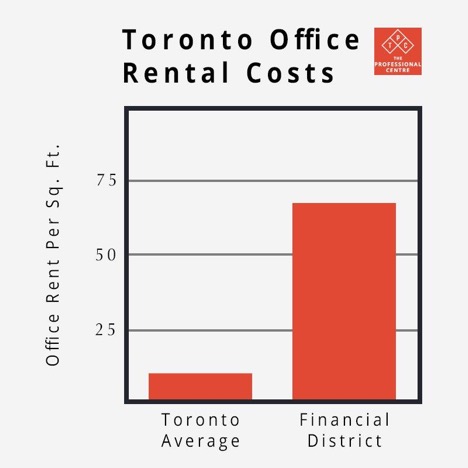
The Financial District has the highest office rental cost in the country, nearly 100% higher than Toronto’s average rent. A virtual office provides this sought-after high-profile address without the price tag.

Toronto Business Space Rental

Many new companies launch without a physical address. For B2C businesses, this can make a company look less trustworthy and reduce sales. A physical address legitimizes your business in the customer’s mind.

Additional Virtual Services

A virtual office offers more than just a mailbox. A range of additional services that increase your business’ versatility and professionalism also exist. It the easiest and fastest way to upgrade your home office.

Taking advantage of on-demand services, like administrative support, keeps your business lean without sacrificing capability. A virtual secretary offers a real person answering your phone calls to promote your professionalism. And our financial support services keep your books in line without the high cost of hiring extra full-time employees.

Some of the additional support services a Toronto virtual office can provide include:

  • Virtual secretary
  • Printing & photocopying
  • On-site shredding
  • IT Service
  • Programming services
  • Payroll
  • Banking & deposits
  • Bookkeeping

As well, virtual office plans in coworking spaces can include access to a number of amenities. These range from printing, photocopying, and high-speed internet, to a place to work and/or meet with clients.

A Place to Go

A virtual office doesn’t just live online. Virtual office packages can also offer physical space. It’s a great alternative to coworking desk rentals if you aren’t in the office often, or don’t need a desk.

At our downtown Toronto coworking spaces, our virtual office users can use the lounge area as much as they need. The lounge is a great place to work, with high-speed internet and plenty of networking opportunities.

It’s a popular option for our virtual tenants who often work from home and need a change of pace. It also gives a professional location for informal interviews and client chats over a coffee. A modern, well-designed space shows people that you’re an agile, up-to-date business that can handle their needs.

Meeting Room for Rent

For more formal or private meetings, meeting room rentals are available. Virtual office users have access to better rates and priority booking for meeting rooms. The fully-equipped meeting rooms add to your professionalism and are sought after, even by large enterprise companies.

As enterprise companies move into Toronto coworking spaces, meeting rooms are one of the most in-demand services. You can have access to the same meeting spaces at great rates.

Rent a Virtual Office in Toronto

Virtual offices are the real deal. Grow your business’ prestige and functionality with an address and amenities in Toronto’s financial core. Contact us today for inquiries or view our malibox and virtual office pricing plans.